
Last Updated on by sanskritikhatri
Introduction

Definition:
Digital literacy is defined as the ability of one to evaluate , manage, find and communicate information via digital platforms. It also refers to the individual’s knowledge of accessing digital tools.
As the digital platform grows, various aspects of our life have been dependent to it. Therefore, Digital Literacy provides the understanding of using devices, software, and internet to access information and data, ways to manage it and helps us participate in digital world. It also helps in maintaining social engagement locally as well as locally.
Digital Literacy In Context of Nepal
Many part of Nepal still faces the internet crisis. Though internet has reached to the people, the digital literacy remains a challenge. Most of Nepal, faces difficulty in using digital platforms. According to the 2022/23 survey, it is considered that only about 31% of the population considered digitally literate. This percent includes, most of the urban citizens which can also to reduces to the digital generation group.
Current State of Digital Literacy in Rural Nepal
As digital literacy, does not only mean to have knowledge of using digital but also to have critical thinking of utilizing it’s resources. A huge population of Nepal fails to attain digital education.
Nepal’s urban-rural digital divide causes digital literacy to fall low, because of limited internet access, inadequate digital infrastructure, and high costs of devices and services. Rural populations, who, are mostly farmers, lack connectivity, facilities and ICT skills which leads to the blockage of increment in digital literacy rate. Despite all these, Our government and many organizations are trying to bridge the digital divide in rural areas.
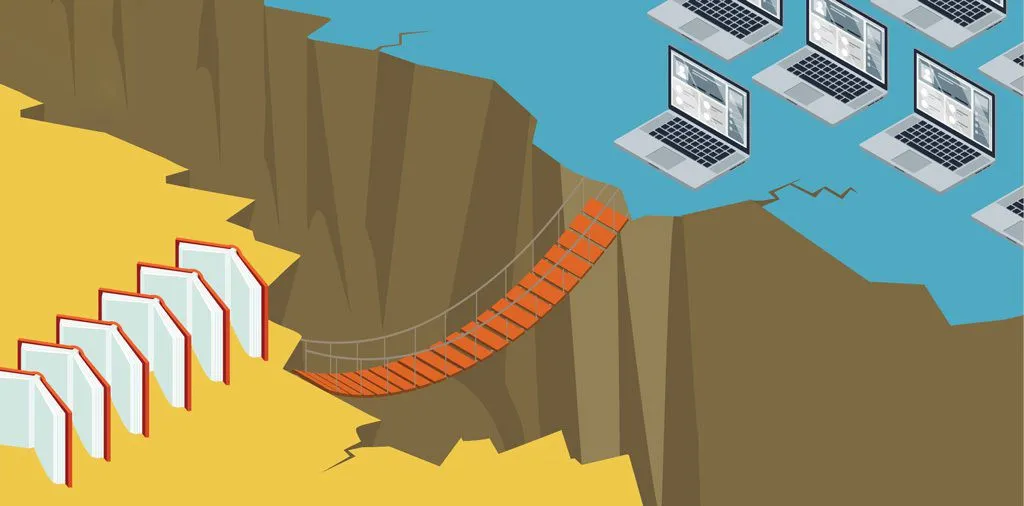
Unlike Urban Nepal, the technologies are not available in the rural Nepal. It’s struggle for people to attain a good quality of gadgets due the financial obstacles and lack of information about them as well. People in rural Nepal are less aware of digital capabilities. Digital marketing can be beneficial for the rural populations, as there hide the talent and skills inherit in people since centuries. Despite, it’s potential to reach higher audience, Rural Nepal fails to deliver to it’s consumer due to lack of digital literacy.
Internet has reached to the rural population but with limitations. Because of loadshedding, It’s hard for them to keep up to the internet and if they become dependent on it then, mobile data is the only option for them which is also non-reachable at most part of Rural Nepal. Hence, it won’t be wrong to say, that digital platform costs them more than the urban population.
Now, let’s dive into the brief discussion of Progress and Barriers of Digital Literacy in Rural Nepal:
Progress of Digital Literacy in Rural Nepal:
- Initiatives of Government : Different NGO, Private sector and Government are collaborating with each other to reach out to the rural population for digital awareness. The Government launched project called ‘Digital Nepal for All’, whose aims is to set up community information technology centres in each of the 753 local governance units, offering basic computer/ internet skills to the large number of people.
- Initiatives from NGO and private sectors: Similarly, NGOs like Nepal Internet Foundation along with APNIC Foundation are implementing “Smart Classrooms” with computers, internet, Solar panels in rural schools. ICT Gyan has been providing digital trainings in many provinces.
- Increment in use of gadgets and internet: Nowadays , every household has at least a mobile for communication along with internet access (be it wi-fi connection or data). With the entry of these devices, people has now, learnt to use common messaging apps like messenger to stay in touch with their family or relatives. Therefore, we can say that their practice of using mobile has given them the little idea of digital platforms.
- Increment in awareness: Through campaigns and workshops organized by Government and NGOs, people are getting knowledge about digital platforms. This is helping them to be aware of the value of digital literacy.
- Empowering marginalized groups: Most of the programs, are focusing on getting attention of women and vulnerable groups in the rural society. They ensure that these groups are included in their events. So, they won’t be deprive of knowledge about digital literacy . Also, help them turn to the digital finance by selling their skills and educating them about it.
These were some of the progress that has happened so far to contribute in levelling up the digital literacy rate.
Barriers of Digital Literacy in Rural Nepal:
- Geographical Complexity and Infrastructures: Due the Nepal Geographical obstacles, there is difficulty in setting up the wi-fi or network towers. Electricity is unreliable hence, there’s no consistency in internet and use of devices.
- Economical differences: As compare to urban areas, Rural areas workers make less amount. Therefore, their income can’t match the cost of the require gadget. Even the internet data plans and connectivity can’t be afforded by them.
- Gender inequality: Rural Nepal still carries a conservative mindset, that forbids women and vulnerable group of people from participating in events. Also, women are not provided mobiles of their own. Therefore, the workshop and campaign only reach to the fewer group of people.
- Unavailability of digital materials: Rural areas don’t have the mobile repairing shops. Even tough, they have the resources are limited. Hence, people face the problems like device maintenance, repair, and power backup.
These were some of the barriers that are blocking Nepal for upgrading the digital literacy rate.
Conclusion
Upgrading digital literate might be challenging but not impossible. There are numerous group of organization working on it and progressing well. Most of barriers are starting to collapse, therefore, it might not take much time for Nepal to upgrade from 31% of digital literate population to higher.
“The illiterate of the 21st century will not be those who cannot read and write, but those who cannot learn, unlearn, and relearn.” – Alvin Toffle
To get to the ICT BYTE, click here.