

Last Updated on by ICT BYTE
Nepal’s journey toward energy independence and green development has reached another significant milestone. On September 21, 2026, Rastriya Banijya Bank (RBB) Limited officially announced its leadership in the consortium financing agreement for the construction of the Jaldigad Hydropower Project. This ambitious run-of-the-river project, designed to generate 21 megawatts (MW) of clean electricity, represents a major collaborative effort between Nepalese financial institutions and private energy developers.
As the lead bank in the consortium, Rastriya Banijya Bank continues to demonstrate its commitment to funding national priority sectors. The successful financial closure of this project not only secures the necessary capital for construction but also reinforces the growing confidence of local financial institutions in Nepal’s booming renewable energy market.
Understanding the Jaldigad Hydropower Project
The Jaldigad Hydropower Project is a mid-sized hydro project located in the Aathbiskot Municipality of the Rukum West district. Rukum West, known for its rugged terrain and abundant water resources, provides an ideal geographical setting for run-of-the-river hydroelectric power generation. With a planned capacity of 21 MW, the project will tap into the natural flow of the local river system to generate reliable, eco-friendly electricity.
Once fully operational, the project is expected to feed millions of units of electricity into Nepal’s national grid. This will help address seasonal electricity shortages, particularly during the dry winter months when river flows across the country decrease and energy demand peaks. By strategically utilizing the water resources of Rukum West, the developers aim to contribute to a more stable and resilient domestic power supply.
Rastriya Banijya Bank Takes the Lead in Consortium Financing
Large-scale infrastructure projects like hydropower plants require substantial capital investment that often exceeds the lending capacity of a single financial institution. To mitigate risk and mobilize the necessary resources, banks form consortiums. In this instance, Rastriya Banijya Bank has stepped up as the lead bank, coordinating the financial arrangements and securing commitments from other participating financial entities.
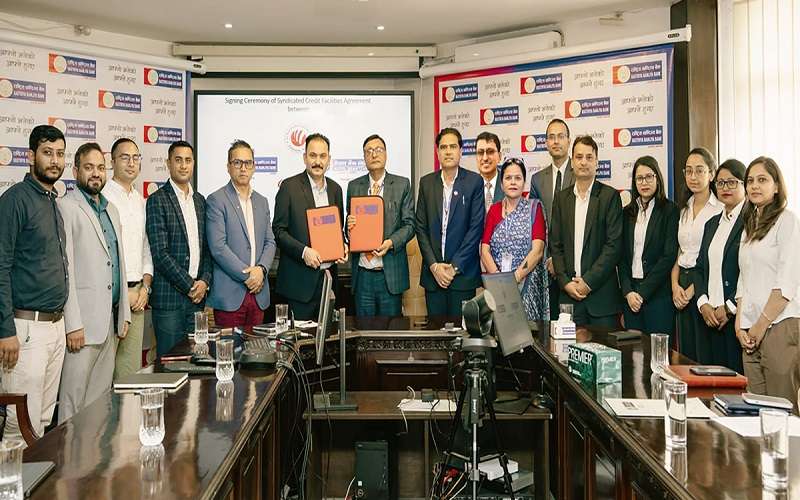
The formal signing and exchange of the financial closure agreement took place in Kathmandu, bringing together senior executives from Rastriya Banijya Bank, representative member banks of the consortium, and the project’s promoting company. This agreement marks the official transition of the Jaldigad Hydropower Project from the planning and design phase into active construction, ensuring that the necessary funds are systematically disbursed as construction milestones are met.
Boosting Nepal’s Renewable Energy Grid
Nepal has set ambitious targets for its energy sector, aiming to produce 15,000 MW of electricity by 2035. Projects like the 21 MW Jaldigad Hydropower Project are essential building blocks in achieving this national vision. While mega-projects often dominate the headlines, mid-sized run-of-the-river projects are highly valued because they can be constructed and brought online relatively quickly, providing faster returns on investment and immediate relief to the national grid.
Furthermore, Nepal’s clean energy transition is not just about meeting domestic demand. The country has increasingly positioned itself as a regional green energy hub, exporting surplus electricity to neighboring countries like India and Bangladesh. Every megawatt added to the national grid, including the output from Jaldigad, enhances Nepal’s export potential, generating valuable foreign currency reserves and narrowing the trade deficit.
Economic and Environmental Impact on Rukum West
Beyond its contribution to the national grid, the Jaldigad Hydropower Project is poised to bring significant socio-economic benefits to the local communities of Aathbiskot Municipality and the broader Rukum West district. The construction phase alone will create hundreds of direct and indirect jobs, ranging from skilled engineering positions to local labor opportunities. This influx of economic activity will stimulate the local market, benefiting small businesses, hospitality providers, and transport services.
Additionally, the development of hydropower infrastructure typically involves the construction of access roads, bridges, and transmission lines, which directly improves local connectivity and quality of life. Hydroelectric developers also allocate a portion of their project shares to local residents, allowing community members to become direct stakeholders and share in the long-term financial success of the project. Environmentally, the project offers a zero-emission source of electricity, directly displacing fossil-fuel alternatives and contributing to Nepal’s climate action commitments.
Conclusion
The financial closure of the 21 MW Jaldigad Hydropower Project, led by Rastriya Banijya Bank, is a testament to the strength and capability of Nepal’s banking sector in driving national development. By channeling domestic capital into sustainable energy infrastructure, RBB and its consortium partners are laying the foundation for a greener, wealthier, and more self-reliant Nepal. As construction begins in Rukum West, all eyes will be on this project to deliver on its promise of clean energy and regional prosperity.